
Canine Science Society
Keynote Speakers

Dr. Anindita Bhadra
Indian Institute of Science Education and Research Kolkata
Speaker Bio:
Dr. Anindita Bhadra is a behavioural biologist at the Department of Biological Sciences,
Indian Institute of Science Education and Research Kolkata. She is engaged in studying the
behaviour, ecology and cognitive abilities of dogs using the free-ranging /street dogs in India
as a model system. She is particularly interested in understanding the evolution of the dog-
human relationship. Dr. Bhadra is the recipient of the INSA young scientist award, SERB
women excellence award, IAP young scientist award and the Janaki Ammal National Women
Bioscientist award Young category 2021. She was involved in the founding of the Indian
National Young Academy of Science (INYAS) in 2014, and was the Chairperson of INYAS
during its first three years of existence. She has been a member of the Global Young
Academy since 2016, where she served as a Co-Chair during 2020-21. She is currently an
alumnus of both INYAS and the GYA. Anindita believes in the responsibility of a scientist in
engaging with the society and is actively engaged in various science outreach activities,
science diplomacy and policy. She is a member of the Inter-academy panel of women in
STEMM, India, and is vocal about various issues faced by women in academia. She serves on
the editorial board of several journals and Frontiers Policy Labs, and is an advisor of the
Open Research Europe community gateway on Evolution and Ecology. A mother of two, she
is also a professional thespian and leads the Bangla theatre group mukhOsh with her husband.

Dr. Candace Croney
Purdue University
Speaker Bio:
Dr. Candace Croney is Director of Purdue University’s Center for Animal Welfare Science, and professor of animal behavior and well-being in the departments of Comparative Pathobiology and Animal Sciences.
Dr. Croney earned her PhD in animal sciences from Penn State University. Before joining Purdue University, she conducted postdoctoral studies at the University of Maryland, College Park. Following this she served as Assistant Director of Conservation Education at the American Zoo and Aquarium Association, and then held faculty appointments in animal behavior and bioethics in the Animal Sciences Department at Oregon State University and in Preventive Medicine at The Ohio State University.
Her research focuses on developing and applying non-invasive metrics of welfare in agricultural and companion animals; understanding effects of rearing environments and management on animal behavior, health, and welfare; public perceptions of animal agriculture and welfare; and bioethics-science interfaces in animal care and welfare policy, practice, and public communications.
She has applied her collaborative research on canine welfare to create and operate the first voluntary, 3rd party-audited national certification program, TMCanine Care Certified, that sets rigorous standards for the care and welfare of dogs in breeding kennels.
Dr. Croney’s research has been featured in numerous national and international media outlets and has been spotlighted in broadcast programs by outlets such as Animal Planet, National Geographic, and the British Broadcasting Corporation.
She serves as scientific advisor on animal welfare to numerous groups, including the American Humane Association, Fairlife, Merck Animal Health, Morris Animal Foundation, Tyson Foods, and Post Holdings.

Dr. Audrey Lin
University of Vienna
Speaker Bio:
Audrey T. Lin, DPhil, is a paleogeneticist whose research bridges ancient genomics, history, anthropology, and Indigenous knowledge. She is currently an APART-USA Fellow funded by the Austrian Academy of Sciences, and is based at the Department of Evolutionary Anthropology, University of Vienna. She previously was a Gerstner Postdoctoral Scholar in Computational Biology at the American Museum of Natural History in New York, a George Burch Postdoctoral Fellow in Theoretical Medicine and Affiliated Theoretical Science and a Peter Buck Postdoctoral Fellow at the Smithsonian National Museum of Natural History in Washington, DC. Her research utilizes recovering ancient biomolecules from archaeological and museum specimens and objects to answer diverse questions on human-mediated evolutionary processes, including domestication, extinction, and mechanisms of zoonoses. She focuses on dogs because she finds their relationships with humans throughout history endlessly interesting. Her work has been published in Science, PNAS, and Proc B.

Dr. Ana Jimenez
Colgate University
Speaker Bio:
Dr. Ana G. Jiménez received a Ph.D in Marine Biology from the University of North
Carolina at Wilmington. She then completed two post-docs: the first at The Ohio State
University while working on bird physiology, and the second at Loyola Marymount University
and Hopkins Marine Station working on marine bivalve physiology. She is now an Associate
Professor in the Biology Department at Colgate University, a liberal arts college in upstate New
York. Her research has included animals from fish and crustaceans, a multitude of bird species
to, now, dogs. Her background in biochemistry and physiology allows her to ask question across
levels of organization from the whole-organism to their cells. She has over 90 peer-reviewed
publications, has recently co-edited the first edition of the “Canine Science” textbook, and her
lab has been funded by the National Science Foundation.

Liz Hammond-Kaarremaa
Smithsonian, Vancouver Island University
Panelist: Special Event - A Focus on the Woolly Dog
Liz holds a MA in Educational Technology and a Master Spinners Certificate. Now retired from Vancouver Island University where she held the position of Director of Research Services, she spends much of her time studying Coast Salish textiles. She is a Research Associate with the Smithsonian and with VIU’s Anthropology Department. She has worked with various museums including: the British Museum, Pitt Rivers Museum, the RBCM, the Smithsonian Institution, MoA at UBC and the Burke Museum helping to identify yarns, fibres, tools and techniques used to create textiles. Liz was instrumental in identifying a rare blanket in the Burke Museum confirmed to be made of Woolly Dog hair.
Liz has given many presentations and workshops on the subject of Coast Salish spinning and textiles to Coast Salish spinners and weavers and has written articles on the subject for magazines such as Selvedge, Spin-Off, Ply, BC Studies and the latest one “The History of Coast Salish ‘Woolly Dogs’ Revealed by Ancient Genomics and Indigenous Knowledge” was published in Science. She also reviews books for The British Columbia Review. Her book with Coast Salish contributors The Teaching of Mutton – A Coast Salish Woolly Dog is being published by Harbour Publishing in the Spring of 2025. Liz lives on Protection Island, BC, in Snuneymuxw territory.

Senaqwila Wyss
Ethnobotanist, weaver, cultural knowledge holder, and co-owner of Raven and Hummingbird Tea Co.
Panelist: Special Event - A Focus on the Woolly Dog
Senaqwila Wyss is from the Skwxwu7mesh Uxwumixw (Squamish Nation), with Tsimshian, Stó:lō, Hawaiian, and Swiss ancestry. She is an ethnobotanist, weaver, cultural knowledge holder, and co-owner of Raven and Hummingbird Tea Co.
She is a member of the Salish Woolly Dog Working Group with the Smithsonian Institution, contributing to the research, revitalization, and protection of Salish Woolly Dog knowledge. Senaqwila continues to educate through workshops, storytelling, and artistic practice, centering Indigenous perspectives and challenging colonial narratives.
She curated the Stémxwulh: Woolly Dog Weavings exhibit at the Museum of North Vancouver (MONOVA). Her work has been published in The Teachings of Mutton: A Coast Salish Woolly Dog, and she has recently exhibited as an artist at the Chicago Field Museum as well as on the Sunshine Coast in Gibsons, BC.
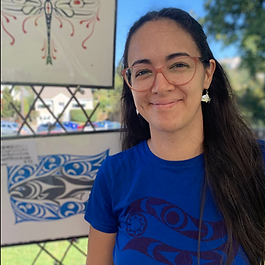
Andrea Fritz
Coast Salish artist and author
Panelist: Special Event - A Focus on the Woolly Dog
Andrea Fritz is a Coast Salish artist and author from the Lyackson First Nation of the Hul’qumi’num-speaking Peoples on Canada’s West Coast. Trained in West Coast Native art in the Victoria school district by Victor Newman (Kwagiulth), she creates work that reflects her People’s history and future, with a focus on animals, place, and their interconnected relationships. Working in acrylic on canvas and wood, serigraphy, vector art, and multimedia, Andrea has exhibited widely and teaches Coast Salish art to students throughout British Columbia. She is also active in community-based art projects and continues to share her knowledge while creating new work that celebrates the beauty of the people, lands, and stories of her region.

Debra Sparrow
Musqueam weaver, artist, and knowledge keeper
Panelist: Special Event - A Focus on the Woolly Dog
Debra Sparrow has been deeply involved with the revival of Musqueam weaving for over thirty years, and has many years of study, trial and learning directly from the work of her ancestors. Her work has been collected and exhibited nationally and internationally, including the University of British Columbia, the Canadian Museum of History, the Royal BC Museum, the Vancouver International Airport (YVR Collections), the Burke Museum of Natural History and Culture (Seattle), and the Smithsonian. She was the recipient of the BC Creative Achievement Award for First Nations Art in 2008. Most recently, she participated in The Fabric of Our Land: Salish Weaving at the Museum of Anthropology at UBC as both an exhibitor and as a regular, active weaving demonstrator using a traditional loom from the museum collection.
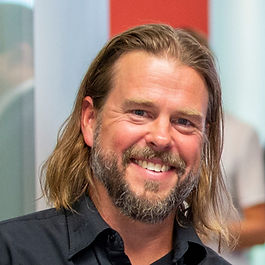
Dr. Kirk French
The Pennsylvania State University
Panelist: Special Event - A Focus on the Woolly Dog
Kirk French is an award-winning professor of anthropology and Emmy-nominated filmmaker at Penn State University. As a filmmaker, French attempts to prioritize the voices and perspectives of the Indigenous groups he collaborates with -- to facilitate documentaries that remain in the authentic voice of the community. French is also the director of the CORVA Studio Lab at Penn State University where community involvement is an essential ingredient to his holistic approach to filmmaking.